I was informed about The Reckoning of Violet Jessop, a Canadian play, via my friend Janis LaCouvee.
I hadn’t had the chance to write about it but I wanted to quickly give you a heads up.
The Reckoning of Violet Jessop is playing at The Vancouver Maritime Museum (yes, the beautiful museum up by Kitsilano Beach) and opened on October 9th, goes until October 25th. More details on the Facebook event page. From the press release:
The Reckoning of Violet Jessop is a true story of an unsinkable woman who survived the Titanic and other disasters. Written by and staring Jenny Abel and directed by Tim Sutherland. Show times at the Vancouver Maritime Museum are 8 pm on October 9, 10, 11, 16, 17, 18, 23, 24, 25. Tickets are $20 and $15 for students, seniors and members.
The Reckoning of Violet Jessop is the story of a remarkable woman who persevered with courage, humor and faith in the face of hardship. Facing the new prospect of land-locked existence after 42 years of service at sea as a stewardess, Violet must now come to terms with her past before embracing her new life.
I really don’t know how my schedule is going to pan out but I will try to go and see it, and, my dear readers … say that I could score a pair of tickets for a contest for you to win [EDIT – yes, indeed I do have a pair of tickets to give away]… you know the drill… drop a comment on this post. I can’t promise I’ll have tickets but you never know 🙂 [EDIT – I’ll draw the winner on Friday October 16th, at BookCamp Vancouver, at 9:00am]
When I started writing the series on my top productivity tips, I thought about what made my days so exciting every day. I thought it was the fact that I always have something different within the same day – academic research, client work, teaching, research, meetings, etc. Then I figured it that it wasn’t only the fact that I never get bored and always do something interesting.
I have managed to budget my time according to my priorities, and I try (some times more successfully than others) to always allocate the most time to the things that will require the hardest thinking or the longest to complete. The full daily hour budget always reflects my priorities. For example, when client work leads to a deliverable that needs to be submitted on deadline, I always make sure to budget time BEFORE the deadline to respond (and sometimes you need to build in a cushion). Other times you need to readjust your strategy based on the inputs and outputs that you’re given – if you need a document that other colleague is generating to base yours on, then you can’t really do anything about it – but you still can budget the right amount of hours/days/weeks to ensure that you will deliver the product/service on time.
My usual strategy is to do a yearly plan, then a quarterly one, then a monthly one, and then a weekly one. Finally, I allocate my weekly hourly budget depending on what I need to deliver by when and to whom. If an item is high priority, I accommodate for contingencies. This may work for you too!
I’ve participated in Blog Action Day in previous years (2008 Poverty, 2007 I chose environment), and this year the theme is climate change. From their site (link above)
Climate change affects us all and it threatens more than the environment. It threatens to cause famine, flooding, war, and millions of refugees.
Given the urgency of the issue of climate change and the upcoming international climate negotiations in Copenhagen this December, we think the blogosphere has the unique opportunity to mobilize millions of people around expressing support for finding a sustainable solution to the climate crisis.
On October 15th, I’ll be writing posts about climate change, both here and on my research blog. I encourage you to do the same.
Those of you who were familiar with me as a graduate student will completely understand why I have the goosebumps right now and I’m almost reduced to tears (of joy, that is). Dr. Elinor Ostrom, the co-founder (along with her incredibly bright and super sweet husband, Vincent Ostrom) of the Workshop on Political Theory and Public Policy at Indiana University, is sharing this year’s Nobel Prize in Economic Sciences with Dr. Oliver Williamson, the most prominent author in the field of transaction cost economics.
Everybody, every-single-body who studies public policy has to go through the work of Williamson and more often than not, the work of Ostrom. In my case, I have two personal connections with Dr. Ostrom (who likes being called Lin). Lin came to Vancouver in 2002 when I was still a graduate student at UBC and visited the graduate college where I used to live. I had an opportunity to share breakfasts and dinners with her and her husband, listen to all the seminars she gave on the governance of the commons and neo-institutional rational choice, and I was even privileged to have them take me for lunch at the cafeteria next door to the Sauder School of Business (99 Chairs).
I will always remember fondly those conversations, as Lin and Vincent gave me lots of advice, from finishing up the PhD thesis, to the academic career, to work-life balance, to using neo-institutional theory in my work. At the time, I hadn’t even thought of working in the field of water governance, but after talking to Lin so enthusiastically and positively about this kind of work, and listening to her praise one of my very dear friends in Mexico who does research in forest governance (and who is also friends with Lin), I thought that I ought it to myself to learn neo-institutionalism. I keep that lunch with Lin and Vincent amongst my fondest memories of graduate school.
I’ve read almost everything Lin has published, and I’ve used much of her and her former PhD students’ work in my own research on water governance. I met some of her PhD students at an institutional analysis workshop in 2005. I am delighted for many, many reasons, but perhaps the one that makes me feel even happier is that, Lin is the first woman to win the Nobel Prize in Economics. This has been a good year for women in the Nobel Prizes.
Congratulations Lin! I hope to come visit to Indiana sometime soon.
In 2007, I think I wrote what I think is the best introductory paragraph ever written on my blog, on the issue of coming out.
Coming out of the closet (in the sexual orientation kind of way) means opening up a whole can of worms when it comes to acceptance by mainstream society, job security and the existence of glass ceilings, conforming to societal norms and dealing with potential rejection. The reason behind National Coming Out Day seems (in my interpretation) a celebration of that moment in a person’s life when it becomes important to embrace a whole identity, not just portions of it.
My thinking still applies. National Coming Out Day (which was celebrated in Vancouver in 2007 and I think 2008, but I haven’t seen anything this 2009) is a celebration of the diversity in our communities, and acceptance of that diversity. In coming out, LGBT people take a big risk The degree to which homophobia is still rampant in a country as accepting as Canada is appalling. I still wake up to headlines of gay men being bashed on Davie Street (in Vancouver) for holding hands. One of my very good friends was a target as well. Why do these incidents keep happening? Because not everyone is seen as equal.
While being gay, lesbian, trans, or queer in general does not define people, it is part and parcel of their personalities and it’s an inherent human right to have that element be a source of pride, not shame. It still is a challenge for gay people to come out, and I think the best way to summarize why some people don’t understand the struggle is to quote from my friend Cecily Walker, who said in a post about diversity in social media,
“Why aren’t there more discussions about diversity? Because it’s awfully hard to see the margins from the centre, and until more marginalized voices can fight their way to the centre and make changes to the status quo, that won’t likely change.”
With this post, I try to bring the conversation about coming out to shift to the centre and help make changes to the status quo. Join me, please (and thank you).
I have been in Canada for the better part of 12, almost 13 years (with a few years in Europe and Mexico here and there, but basically, I set foot in Canadian soil over a decade ago). The significance of Thanksgiving in Canada is a bit different to that of the United States (we don’t have Thanksgiving in Mexico, or any other Latin American country for that matter).
I am good at saying thanks to my friends and family and in general, to anybody who has been kind and generous to me, but let’s take a quick stab at what I’m thankful for.
I’m thankful for the life I have. It’s challenging, at times, trying to balance research with client work, with community service and with social media in general, but I’m thankful that it’s so intense.
I’m thankful for being complete. I don’t need anyone else to complete me, I’m complete as I am. I am thankful that I like myself and enjoy my own company.
And I am thankful that I’m in one piece, despite having had migraines for a long while and lately, a bout of painful blisters.
I’m thankful for the friends I have, the new friends who have come into my life and the possibilities for new friendships. I am delighted that social media has enabled me to make new acquaintances and that our lives have become so intertwined that we no longer have a differentiation on whether they are social media or non-techie friends.
I am thankful (in spades, seriously) for the family I have. I’ve always been loved and supported by my brothers, my Mom and Dad, my cousins, uncles, aunties and our extended families. I am who I am in a large part because of where I come from, and the family I am privileged to be part of.
I am thankful for being able to do what I love on an everyday basis. I love teaching, I love doing research, I love doing client work and consulting, I love socializing and I do this 7 days a week. I have finally managed to begin to strike a balance between my environmental work, my social media work, my teaching and my research. And yet, I still have time for my friends.
I am thankful that my future looks bright and that I wake up every day with a goal and purpose. I am thankful that I can put food on the table and have a roof above me and sleep sound at night because I have done my very best, every single day.
And, last but not least, I am thankful that the people who read my blog find it entertaining, that they share their viewpoints and engage in conversation with me. I am thankful that the people who follow me on Twitter find my little tidbits interesting. I am thankful that social media opened up myriad ways in which I can now express and communicate with people.
For those and many more reasons, I am thankful. Happy Canadian Thanksgiving everyone!
I thought, seriously, that I would have Empathy as my super power. But apparently I’m pirokinetic
What superpower would you have?
Your Result: Pyrokinesis
This is the power to control and ignite fire. Many take this to be an evil power, but is intended only for people who start out good, but may later use their power to start wars, kill, or torture. This is a rare case though. People with this power are generally males who enjoy helping and saving power, and their power usually does not help them that much. They are usually very kind people, but the can burn a whole city down with in a matter of minutes.
You may recall a post by Lorraine where she informed the community to come to a gathering for another coworking facility in Vancouver. I am here, so I am taking as verbatim notes as I can.
Jeremy and Eesmyal are giving the quick introduction.
A lot of talk about coworking spaces, but not sure why it has happened now.
Let’s make it happen – there may be money to develop a feasibility study to create this facility.
He helped develop the hub in Halifax. It was funny to work on this. There’s probably a lot of people who have the same ideas. About 10 months ago.
Similar kind of ‘hub’ structure.
Jeremy – being involved in The Halifax Hub – he started it a few years ago. They took about a year to develop the community of the hub. He started getting a business plan done. Lot of independent workers who want to work in smaller spaces.
5:49
They wanted to have this hub of innovation in Halifax. The more they talked to people, the more momentum they got – they saw this kind of youthful movement trickling through Halifax.
Halifax needed workspace that people could rent, and they put them into the Halifax Hub. It’s an evolving project.
5:50
40-50 people there, lots of speakers, music, events, discussions, community discussions, planning discussions, they try to make it a community space, leader space.
5:50
Bring in community speakers – events, from iPhone app hacking for charities to musical events, to political engagements.
5:51
He wants to bring this kind of energy to Vancouver.
5:52
[RAUL’S COMMENT – Uh, Jeremy – WorkSpace had been on for a long whole before it closed, and The Network Hub has been here since early 2006 – so I find it kind of surprising that you didn’t see that this kind of energy/space was already here – definitely we need more spaces like The Network Hub, WorkSpace, maybe even WaveFront, etc.]
5:54
Mark is speaking about the Center for Social Innovation in Toronto. It’s very unique in a couple of interesting respects. It’s, as a workspace, there’s a very generous allotment of social space within that structure. The center of the Centre for Social Innovation is a kitchen, it acts as a mixing chamber. Allows organizations to come together in a neat way. Allows them to connect .
The other way is organizational, they have staff of about 5 people that are running the center. Almost fanatical sense of faith that this organization carries that resonates with people.
The community animator – that person’s sole function is to reach out to the community of people, get them engaged, etc.
5:54
It’s been operating for a few years, they offer quite a broad scale of spaces that you can have, from having your own discreet office to hotdesks.
5:54
With that comes the access to office amenities, office address, mailbox, etc.
He started WorkSpace a few years ago, and he was frustrated with working in coffee shops, he wanted to get people together. The thing was a big risk, but he went for it.
They got huge amount of press, there is all kinds of great people. They had some big challenges.
A lot of people didn’t understand what coworking was about so they put a lot of energy into educating people – some of that energy took away from selling – so their sales were a lot slower than they had anticipated in the beginning.
At the beginning they got up to 75 members, those members were paying on average $ 275 depending on the month. They did that for a little while, they broke even. He sold to Jayson Maynard last summer.
Jayson had some difficulties, had to move out of town, so he had to close the business down. It was a great business, they had a lot of fun riding it.
6:03
The space was like a club. The desks/infrastructure were secondary to the social part of the business. There’s a lot of operating leverage that you take on in a business like this. Your costs are fixed and you spend a lot of energy and there is a big risk that you take on.
In another model, you should try to match revenues and expenses flows more evenly.
6:04
He would recommend selling and sending people to recruit, bring their friends in, that could have been helpful.
6:05
DID YOU CHARGE OR DID YOU GIVE AWAY THE SPACE?
That depended. They did a lot of events for free – the determining factor was – if it was FOR the members – then for sure. In some instances they charged.
6:05
Was it a scaled model – per hour, how did that work?
6:06
$ 100 a day a week
$ 250 2-3 day/week
$ 400 1 day every day
6:06
Which was the membership that was the most popular for WorkSpace. Through popularity – lots of evening memberships.
6:11
Jonathan from the Global Hub (in London)
This was an unconventional space. First and foremost. This is to be a bit brokered about. It’s a crazy project. Turning crises into opportunity. It’s a response. People quickly responding – a sense of enterprising.
6:13
KEVIN Formerly with Check Your Head Now with Genius / Vancouver School Board
Genius is a charity. One of the projects they wanted to do was a colocation initiative – their goal (money came from VanCity) – they want to support organizations that support social change.
6:15
[RAUL’S COMMENT – I lost all of the text of Jay Catalan’s presentation about The Network Hub http://www.thenetworkhub.ca] Sorry
I (Raul) also spoke about why people are talking a lot about coworking right now (because it’s popular in IT, maybe not in sustainability).
Many people in sustainability aren’t aware or weren’t aware of WorkSpace or The Network Hub, which makes PERFECT SENSE because they aren’t immersed in tech.
6:16
MICHELLE From The Tyee
Possibly an opportunity (David Wong) The Tyee just moved to a new office space in Main and Georgia (it’s own space). The Tyee is a daily online magazine for BC. They are fantastic (and not really modest, hehehe ;))
6:18
The hope is, at the very least, fill the building with like-minded tenants. The larger dream is sort of making it into a re-investment. They could just fill the building with 6,000 sq ft. It’s an opportunity, it’s very early stages, they’re here to throw that out there and see what the demand is.
6:22
OLIVE is doing the presentations, and introductions, but frankly I’m tired so I’m stopping the liveblog.
One note I should make – NOBODY from the tech community showed up, with the exception of ME and Jay Catalan (who had been invited, anyway).
6:22
Which, you know, speaks to the fact that “the community” needs a coworking space, yet nobody from the community showed up.
First of all, let me add the disclaimer at the very beginning, because I know that many people who went to opening night may not realize what a stage reading is. What I (and a Pacific Theatre packed stage) witnessed was what in theatrical terms is called a stage reading. Actors prepared for this particular performance for two and a half days. I had no clue until I actually heard the director (Stephen Drover) explain before the show begun. And by the end of the show, I adored Stephen. He’s such a talented director and nice guy.
The description on Facebook (read below) doesn’t really do it justice. The Last Days of Judas Iscariot is an agile, fluid, sarcastic, funny and delightful show that probes our beliefs on whether Judas Iscariot indeed betrayed Jesus, on whether forgiveness can exist at the highest levels. The last scene (you HAVE to be attentive up until the end of the play) is incredibly powerful (I am not giving away anything, you have to see it for yourself).
A couple thousand years after his infamous kiss, the paperwork has finally been filed and Judas will get his trial—but Satan is on the witness list. Pacific Theatre is proud to present, in a co-production with Pound of Flesh Theatre, an extended staged reading of Stephen Adly Guirgis’ wildly funny and scathingly provocative drama THE LAST DAYS OF JUDAS ISCARIOT. In a cosmic courtroom drama that mixes myth and history, set halfway between Heaven and Hell in a place called Hope, the witnesses are called—Mother Teresa, Pontius Pilate, Sigmund Freud, a foul-mouthed Saint Monica, and, of course, Satan—to decide eternal questions of forgiveness, mercy, and damnation.
I definitely loved every single actor’s performance, including Sarah Afful (St. Monica), Camyar Chai (Jesus), Alexa Devine (Mary Magdalene), Bob Frazer (outstanding as Judas Iscariot), Erla Faye Forsyth (Henrietta Iscariot), Anthony F. Ingram (Freud, St. Thomas), Michael Kopsa (whom I really liked as Satan), Benjamin Miller (Bailiff), Kevin McNulty (a very stern and funny Judge Littlefield), Dawn Petten (Mother Teresa), Ron Reed (Butch Honeywell, Matthias), Denis Simpson (Pontius Pilate, Simon the Zealot – great performances too), Katharine Venour (dead-pan right and fantastic as Cunningham), Marcus Youssef (fantastic and funny El Fayoumey), with the excellent direction of Simon Drover.
I had a chance to have an in-depth and delightful conversation with both Michael Kopsa (who appeared in several episodes of Cold Squad) and Bob Frazer (who was Iago on Othello, another play I reviewed). I mentioned to Michael that his turn as Lucifer was incredibly funny and really solid. Frazer (who was Judas Iscariot) was unbelievably good in his role as Judas Iscariot, showing a very broad range (vulnerable, human, remorseful, disoriented and angry). I told Bob Frazer that I loved him during the first half of Othello, and hated him deeply during the second half (which, as Bob said, is exactly what should happen).
With a multicultural, outstandingly talented, versatile and adaptive cast, the production of The Last Judas Iscariot put together a show that, despite being a stage reading, really made me feel as though it had been a full-on show. I really despise the cuts to arts funding because they are putting our extremely solid theatre scene here in Vancouver under risk. So I would encourage my readers to check the plays I have been writing about, because we do have a vibrant and solid theatre community here. Let us help them stay afloat.
Disclosure: The tickets to attend the play were sponsored very generously by Pacific Theatre. In any review I write or publish on my site, I retain editorial control at all times. Should you have any questions/concern feel free to contact me via e-mail through my contact form.
I first met John Biehler in January of 2008. However, as you know, months in geek time are equivalent to years. I do feel as though I’ve been friends with John for years. He is a very talented photographer, a really solid Apple geek (I know, I’m still a PC-slave) and more than anything, a really good human being. Many a time (and this is an anecdote I tell everyone in the tech community) I have asked John for advice on how my blogging career should develop. From moving to a self-hosted install of WordPress, to issues of anonymity, to issues of ethics, I’ve always believed in John’s ability to provide me with a very smart, analytical viewpoint that would solidify my decisions in regards to the tech world. I still check back from time to time on a comment he posted on an entry of mine of early 2008 where he gave me lots of sage advice.
I hope you have a wonderful birthday, and look forward to hanging out with you (and Stacie) for many years to come! Enjoy your day, my friend!
I can’t believe that, seeing as I am interested in issues of early detection and treatment of cancer, and I’m friends with a breast-cancer survivor, Christine (@musecrossing on Twitter) I have neglected to write about the fact that October is Breast Cancer Awareness Month. I’ve lost two of my Aunties to cancer (neither to breast cancer, though).
I have been overprotective with my Mom (whose two sisters have passed away of various forms of cancer) and I have always encouraged her to check herself for any kind of abnormal growth. When I was doing my MBA coursework I worked for a biotechnology company here in Vancouver that specialized in cancer-attacking pharmaceuticals.
I have always had an interest or “stake” in all things cancer-related. I would like to encourage all my female readers and everyone who has a friend/mother/sister to take the Thingamaboob test.
For the first time in history, BC Cancer Agency scientists in British Columbia, Canada have decoded all of the three billion letters in the DNA sequence of a metastatic lobular breast cancer tumour, a type of breast cancer which accounts for about 10 per cent of all breast cancers, and have found all of the mutations, or “spelling” mistakes that caused the cancer to spread.
The landmark study, which will be published October 8th as the cover story in the prestigious international science journal Nature, helps unlock the secrets of how cancer begins and spreads, thus pointing the way to the development of new breast cancer treatment targets and therapies.
You can check the announcement below (video courtesy of BC Cancer Foundation)
Last week, I had a chance to check outThe House of Kosa on opening night. The House of Kosa is a TigerMilk production that takes place at the PAL Theatre in Coal Harbour. It was a bit of a surprise as I sat near one of the actors who performed in The 21st Floor (very nice guy, by the way) and near the director of Nelly Boy (a production I’m hoping to go and see). Actors, producers and directors are very keen and analytical about their peers’ productions, I can tell you that!
The preview offered a bit of insight into what to expect in this deconstruction of the haute couture industry.
A chorus of models, moonlighting as seamstresses in a basement sweatshop, unweave the twisted workings of the family that inhabit the House above them. The Mother (played by celebrated dancer/choreographer, Barbara Bourget) is in the attic creating the intricate designs, while devising the future of her family. The Father (Michael Springate) is at the breakfast table encouraging his Daughter (Kirsten Slenning) to recount her latest tale of front page debauchery.
I have to say that there were many, many good things about House of Kosa, and one thing that I would recommend they change. House of Kosa is experimental and, in my view, de-constructionist. As we follow the evolution of The Daughter’s twisted behaviour and the dominance of The Father’s anachronistic views of women and their role in society (sometimes The Daughter and The Mother seem to be slaves to the latest whim of The Father), we are reminded of how perceptions shift as we change vantage points. As a witness to The Daughter’s erratic behaviour, I felt as though I understood where she was coming from. Wanting to break free from The Father’s subjugation, The Daughter embarks in night after night after night of debauchery, while the chorus of models remain an omnipresent fixture in the House of Kosa.
I am a big fan of experimental theatre, but if there were something I’d want to suggest to the director and producer is to either cut the play short or divide it with an intermission. Two straight hours of heavyweight, intense and strong acting that demands the attention of the audience to every single detail (otherwise you lose the thread of the argument that House of Kosa is posing) took a bit of a toll on me. Granted, I’ve been working 12-16 hour days, so maybe that was also the case.
At any rate, House of Kosa is a very good production, and I encourage my readers to check it out. The acting is fantastic, and I personally enjoyed the play.
Disclosure: The tickets to attend the play and a previous pair of tickets for a lucky reader were sponsored very generously by the production team of House of Kosa. In any review I write or publish on my site, I retain editorial control at all times. Should you have any questions/concern feel free to contact me via e-mail through my contact form.
Writing my first research book (on wastewater governance) was absolutely painful. I remember waking up in the middle of the night (as the book was supposed to be one of the research outputs of a grant-funded project) wondering “how the hell am I going to finish an entire book?” I then came across a research report that a good friend of mine had written and found a way out.
My friend is a scholar who studies urban water scarcity, and she had previously written at least 2 other books. When I read the last one, I realized that her book was composed of three individual chapters (almost like 3 individual research reports) bound by an introductory chapter and a conclusions chapter. This is now one of the most acclaimed models for PhD theses (the ‘manuscript’ model) where the thesis is composed of 3 peer-reviewed journal articles that are produced out of the research project.
Reading my friend’s project got me thinking of how I could make my book be created as 3 stand-alone chapters that would then be bound by an introduction and a conclusion. I figured out a way to break down my research project into three different pieces of research, and each one of these pieces, into more manageable tasks. I had no longer the pressure to write A FULL BOOK. All I had to do was complete the research for each one of the individual chapters and then write it up. This process allowed me to complete the book.
Throughout my life, I’ve read many books and articles on productivity, and at some point, I think I’ve just absorbed the notion that large projects have to be broken down into more manageable tasks otherwise it’s almost impossible to complete them. I now do this breakdown up to the daily task list. I break down what I have to accomplish in a month into weekly and daily task lists, which allows me to feel at the end of each day that I’ve been productive enough.
So I don’t make a huge list of the fact that I need to write 90 blog posts for this site. I just think about how 2-3 entries a day can keep my creative juices flowing, and I assign myself the task of writing these, along with my own freelance writing, client work, etc.
These daily task lists, however, must be prioritized. Otherwise, we all would do the same easy task all the time. So, tackle the most urgent tasks head on. You’ll be on your way to complete your project sooner than you think.
Um. I guess this means that it’s alright that I have a home office in my bedroom!
You Think Best in Your Bedroom
In order to be able to think, you need to feel like you have some privacy and space.
It’s likely that you spent a lot of time in your bedroom while you were growing up. It’s your sanctuary.
You need a high level in control in your life, especially when you have something important to do.
The best thing about your room is that it’s exactly the way you like it. Having things the way you want allows you to relax and think.
As many of my readers may know (I wonder who really doesn’t know), I do freelance writing and I have a consulting practice in addition to my many other hats (researcher, educator, blogger).
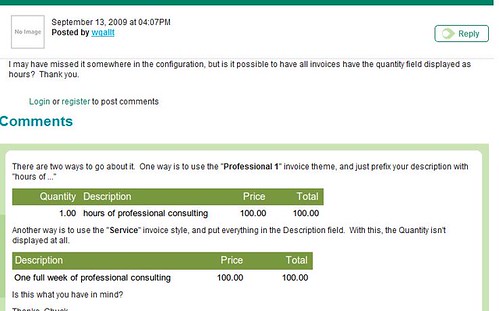
One of the questions I asked the community about was how to pick the right kind of software to invoice my clients. Many of my fellow tech/freelancers suggested FreshBooks. I tested three online billing systems. One of them was from the UK and never got to really test it. The other one was Cashboard (which deserves a commentary here insofar it had nice templates for invoices) and the third one I used was BillingBoss, as my friend Victoria Taylor asked me if I’d be interested in reviewing BillingBoss.
The first thing that really attracted me to BillingBoss was that it was free (yeah, I am saying that even after posting that entry on the economics of free or why I don’t do things gratis anymore). But let’s face it. We all like free stuff. I’m a human like everybody else, so I definitely liked the fact that BillingBoss was free. I found the interface really easy to use, and right now I have it set up so that the invoices of two of my freelance writing clients are submitted via BillingBoss.
Three things I did not like were (a) the limited number of invoice templates, (b) the fact that it doesn’t actually track hours (it’s more for invoices for products/services where you bill by the project or by the item, rather than by the hour, unless you do a walk-around this limitation), and (c) the fact that it doesn’t allow for hard breaks (e.g. Ctrl +13, a hard return) in the invoices. Thus, my freelance writing invoice was really cluttered.
Overall, I would give BillingBoss a 8/10 in terms of how easy it is to use as a billing/invoicing software. That said, I am sure the next version (which probably will have a cost) will be better. I can definitely see room for improvement. The interface is really easy to use, although as I mentioned, it doesn’t allow to track billable hours.
I wrote this review of BillingBoss as the software was suggested to me by Victoria Taylor from Rocket XL. I have not been paid to write the review. This review is entirely my opinion. In any review I write, I retain editorial control at all times. Should you have any questions or should your company want to send me a product for review, feel free to contact me via e-mail through my contact form.
Every year since I started blogging, I have written about Homelessness Action Week (2007, 2008). In fact, I have been involved with homelessness all year, not only this week. I try to do my part in helping in any way I can (mostly, from my blogging and academic trenches). I really wish I could do more, but at least, one of the few things I can do is highlight the issues at hand, and the events coming up.
There are numerous events in Vancouver (the majority of which I can’t attend, sadly) but one that I would LOVE a guest blogger for is Friday’s event at the Museum of Vancouver (7pm) where Monte Paulsen from The Tyee will be speaking about a survey on the state of homelessness in Vancouver. If you’d be interested in covering the event for me, please let me know by dropping a comment or via my contact form. I’d like to see how it compares with Mangano’s talk at The Vancouver Board of Trade.
I’m also really intrigued by the Homeless Connect project, so I’ll have to find out more about it. If you want to get involved, this link will open a PDF document with some ideas on how to get involved in tackling issues of homelessness.
My parents (both of them) have been teachers (well, professors more like it) for longer than I’ve been on this planet. All my brothers and myself have taught. Two of my brothers, my Mom and I all have PhDs which means that we are qualified to teach at the university level. And my late Auntie L was an elementary school teacher. So I was delighted to hear from my friend Erica Hargreave (who is also a teacher) about World’s Teachers Day.
5 October is a day to celebrate teachers and the central role they play in guiding children, youths & adults through the life-long learning process. This year, World Teachers’ Day will focus on the role of teachers within the context of the global financial and economic crisis and the need to invest in teachers now as a means to secure post-crisis regeneration.
It is critical, during these difficult times, to seek mechanisms that protect the teaching profession. It is also crucial, despite the crisis, to ensure that investment in teachers is sufficient and proportionate to the demands made upon them. It is the teaching force with its knowledge, experience and foresight which can bring new insights to global solutions. Join us in celebrating this!
Teaching is not only in my genes, but it is in my blood, it is in my soul and it’s something I adore doing. I have taught at all levels (high school, undergraduate, Masters and PhD), I have taught in different languages (mostly Spanish and English) and I have taught in different countries. I have taught a broad variety of subjects: strategic management, microeconomics, environmental management, environmental policy, public policy, leather chemistry and even some social media stuff.
The most important thing is, I teach because I am passionate about it. I love shaping my students’ thinking processes. I love sharing what I have learned. I love helping people grow and learn. It pains me whenever a semester goes by and I don’t teach (something that luckily will be remedied starting this coming Saturday!) I am hoping that in January, I’ll be teaching at least one (if I’m lucky, three) courses at the university level.
To my Mom (who is still a professor at her university), my brothers (who are both assistant professors in US universities), to my former PhD supervisor and my instructors/professors/teachers, my friends who teach in each one of their respective countries, and everyone else who is a teacher in one way or another, my congratulations. We are all contributing in one way or another to the growth of our societies.
Happy World’s Teachers Day! You can follow WTD on Twitter.
My good friend Simon Ogden invited me to the newest Bill Marchant production, one that he is co-producing, Gift of Screws at the Jericho Arts Centre (1675 Discovery Street) opening October 6 thru to October 17, 2009. I should be at the opening night on Oct 8th. In their own words…
It’s two one–act plays bundled into one that explores where art and fascism meet.
WARNING: This show contains adult content, nudity, coarse language and all the other treats you would expect in a Bill Marchant play. Don’t bring your children or underage date.
Boris Mann is leading this session at BarCamp Vancouver 2009
Since my office space is at The Network Hub, and I’ve been writing a series of blog entries on coworking, I figured this session was one of the key ones to follow.
I had this amazing idea of having a ultra-mega-uber-sweet blog post that I was going to pre-post so that Minna Van (one of my very best friends and one of the co-owners of The Network Hub) would see it before she woke up. I had written beautiful words and a number of compliments for her.
Then I realized that I fell asleep before writing a homage to Minna and thus this post is really late, as I am right in the middle of BarCamp Vancouver 2009. But it’s never late to wish a very close friend, someone I see as family, a very happy birthday.
Minna – I have told you this in public and in private, I celebrate your life today not only because you’re full of energy, love, vitality and a passion to make entrepreneurs succeed. I also celebrate it because you have been a rock to me.
You have been a key element in my own success, and thanks in many ways to your support, I am as successful with my consulting practice as I am right now.
You are someone I admire, someone I look up to, someone I respect and more importantly, someone i love as a very close friend, and as family. To you, I will raise a glass of wine tonight and celebrate with you, because you deserve all the happiness in the world.
When I first took a course with my former PhD supervisor (who loves economics just about as much as I do), he reminded us that people buy their caffeinated drinks (lattes, capuccinos) because it’s a small luxury. Today, I had the opportunity to enjoy that in the form of a quick coffee break with my good friend Gus at Take 5.
The experience was so positive that it inspired me to even search for data on the psychology and economics of coffee (did you know that there’s an entry on Wikipedia on the economics of coffee?). At Take 5 (the location we went to was the West Hastings and Granville one, right outside the Canada Line exit for Waterfront Station) I felt that I was in a coffee lounge. The music isn’t overwhelming, the service is prompt, courteous and friendly, and the coffee isn’t bitter.
We ordered 2 lattes with muffin combos ($ 4.00 per combo). I chose an apple sauce with cranberry muffin, and added cinnamon and chocolate to my latte. I really enjoyed the taste and I didn’t feel it was heavy (I am lactose-intolerant so anything with milk added becomes a bit too heavy and rough on my stomach).
I learned that Take 5 not only offers free wireless to their customers, but they are also using social media platforms to spread the word. You can find them on Twitter @Take5cafeBC (hat tips to Mike Yurechko for finding the handle).
This 2009, I’ve been very lucky in that many local companies, both very established and indie (Pacific Theatre, The Arts Club, Bard on the Beach, Fighting Chance Productions, Machine Fair, amongst many others) have invited me to attend their fantastic shows. Even better, they have been willing to sponsor tickets for my readers. I’ve been lucky to give away many pairs of tickets for my audience and that’s been really great because I love being able to provide value to my readers and to the artistic companies as well.
I am well aware of the recent budgetary cuts to the arts in British Columbia, and while I am not a person who usually engages in protests and movements (I study them, I don’t participate in them), I was more than happy to stand besides the people who protested at the Vancouver Art Gallery a few weeks back.
I’m a trained dancer, I’ve been a stage actor and thus I feel very much part of Vancouver’s artistic community. In particular, to my theatre friends, just a few words of gratitude – THANK YOU.
When introducing the premiere of The Idiot Cycle, director Gabrielle Schick Garcia dedicated its screening to a family friend currently undergoing chemotherapy. The starkly personal connection of the director to her material was evident before the projector started.
If Schick’s emotional plea was somehow missed by anyone in the audience that night, the film’s opening sequence would make it painfully clear. Never one to shy away from imagery of any kind, I found myself unable to watch as the director’s mother bravely exposed her very personal reality while bandaging the wounds from her recent mastectomy. When confronted by this painfully graphic, uncomfortable image many in the audience impulsively turned away, thus underscoring the motivation behind The Idiot Cycle. Schick wants her audience to squirm. Looking away from the ugliest effects of cancer onscreen is the clearest reflection she can provide to those who have looked away from its sickening truths in their own daily life.
The territory explored in The Idiot Cycle is not particularly groundbreaking but it does succeed as a more heartfelt complement to similarly-themed efforts. Familiar, complex conspiratorial strains echo throughout, as other recent films cast many of the same corporations – notably chemical and agricultural giant Monsanto – as major villains. Traveling to the petrochemical processing Mecca that is Sarnia, Ontario, Schick explores the so-called “Chemical Valley” and the devastating environmental health issues many in the Aamjiwnaang First Nation experience as a result of their proximity to widespread industrial pollution. Schick paints a grim portrait of this town and its citizens as being part of some sort of slow-burning, Canadian Chernobyl. One of the scientific experts interviewed goes even further in her indictment of Canada’s sorry system of environmental standards regulations, suggesting that “Sarnia is violating Nuremberg protocols by experimenting on the people of Chemical Valley.” Schick deftly navigates the murky channels connecting corporate greed, individual, societal and governmental complicity and the never-ending, lucrative business of healthcare. Sarnia was previously hailed as an example of the moral authority of Canada’s healthcare system in Michael Moore’s Sicko (2007). Schick suggests that our ‘free’ system is the price Canadians have agreed to pay in exchange for allowing those who operate the wheels perpetuating The Idiot Cycle to run at all.
At its best, The Idiot Cycle is a personal exploration by a daughter, clearly agonized and frustrated that her non-smoking, non-drinking, otherwise healthy-living mother would be inexplicably afflicted with breast cancer. At its worst the film tries to offset the weighty burden of its assertions with moments of gimmicky animation and awkward attempts at comedic spoof, with little to no effect.
The timing of the film’s release seems especially poignant considering that October is Breast Cancer Awareness month. One of the experts noted that when considering cancer, it is essential that we all take a moment to “look back,” and focus as much of our efforts on understanding the reasons why more people are getting cancer, as opposed to just treating the disease once it strikes. In an effort to reason and understand the root causes behind her mother’s cancer Schick’s compelling investigation unravels an elaborate, frightening web of corporate deception, lies and personal truths – one that, like her mother’s wounds, she wants us to try to look at and personalize as our own.
This review was written by Rachel Fox who tweets as @FoxMe. Disclosure: The tickets to attend the movie were given to me by Invoke Media. In any review I write or publish on my site, I retain editorial control at all times. Should you have any questions/concern feel free to contact me via e-mail through my contact form.
Those who know me (and those who read my blog frequently) know very well that I haven’t discontinued my research activities even if I do blogging, freelance writing and client work (consulting). Frequently, I get asked the question “How do you manage to keep your workflow going when you have to do client work, freelance writing, etc…?”
Well, unfortunately I have exactly the same number of days and hours in a day as everyone does, sadly (I’ve frequently asked The Powers That Be to either clone me or give me like 72 hour days but I think my request has fallen in deaf ears… too bad, as I could seriously use a clone!). What I used to do up until earlier this year (around July 2009) was to just dedicate a few hours a day to research, exclusively (mostly late at night, which explains to you why I would be awake at 4am – still doing research).
What I’ve now started doing is dedicating one entire day to only research. This means that, while I may be answering some critical emails or tweets, or (obviously) client work, my brain is primarily focused on my research. If you read my tweets of today, for the most part, they’ve been on the drinking water project I’m conducting with Dr. Rachel Black and Julia Ko, M.A.
Do you dedicate one full day to creative/research/thinking activities? Or do you do interspersed hours throughout each day? As usual, have at it on the comments section.
 I was informed about The Reckoning of Violet Jessop, a Canadian play, via my friend Janis LaCouvee.